The SINGER Heavy Duty Iron-On Fusing Web review is for anyone who wants a straightforward way to bond fabric for repairs or craft projects without sewing every seam.
Its narrow, eight-yard roll is suited to hems, facings, tears, and other small-to-medium jobs, with fabric compatibility described from lightweight materials through denim, corduroy, and twill.
SINGER Fusing Web Review Summary
The quick verdict
4,000+ ratings
Read Amazon ReviewsSINGER Heavy Duty Iron-On Fusing Web
A practical choice for sewists and crafters who want an iron-on way to join fabric, mend tears, or secure hems without stitching.
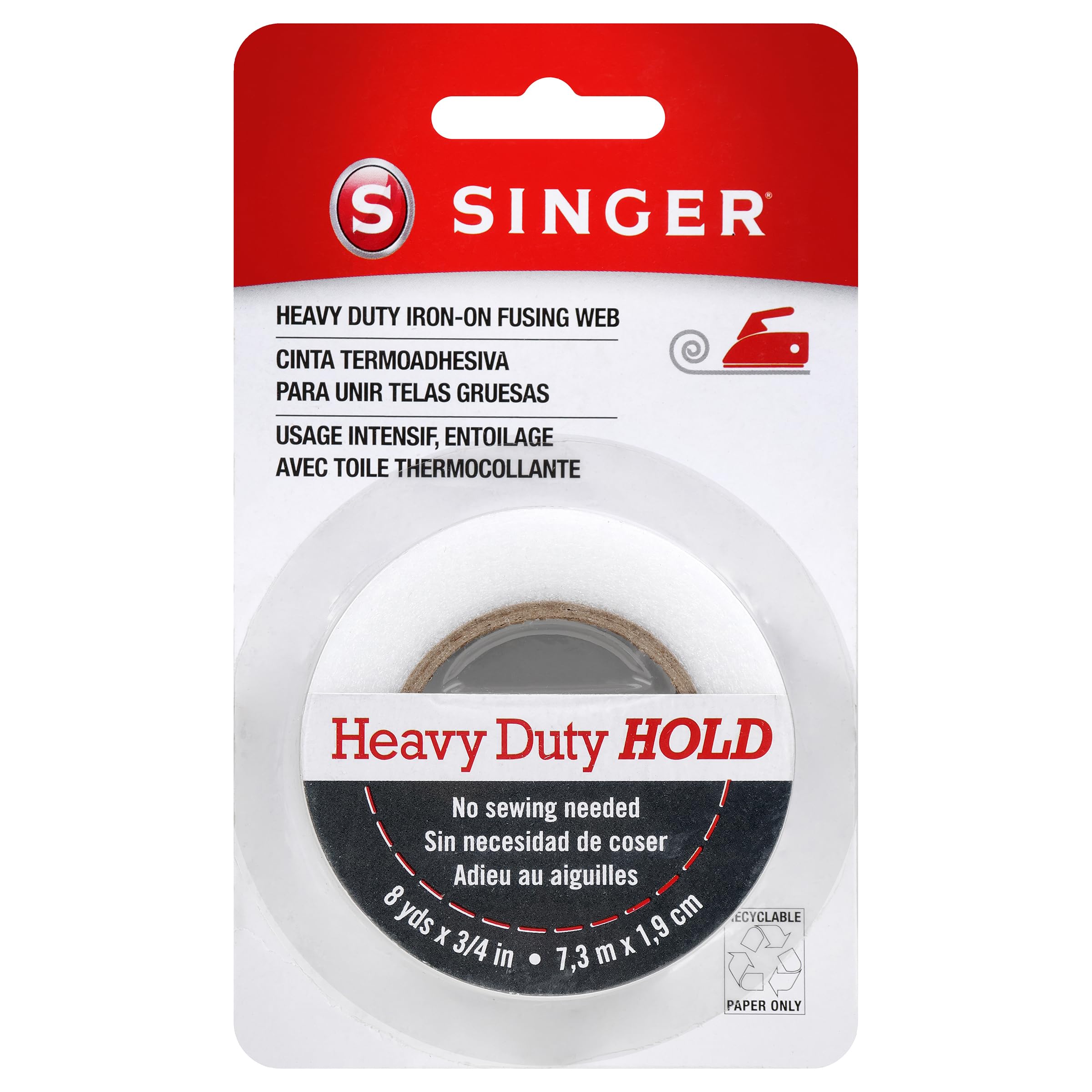
- Three-quarter-inch-wide iron-on fusing web in an eight-yard roll.
- Designed to fuse two fabric pieces without sewing.
- Intended for hems, facings, tear mending, and arts-and-crafts projects.
- Described for use with lightweight fabrics and heavier materials including denim, corduroy, and twill.

Pros
- Combines several common garment and craft uses in one narrow adhesive strip.
- The eight-yard length can support multiple small repairs or hem applications.
Consider before buying
- At three-quarters of an inch wide, the strip may be less convenient for broad fabric areas or wide hems.
- Application temperature, pressing time, and wash-care details are not provided in the product description, so buyers should consult the package directions.
Read the full review summary
This adhesive web is intended to fuse two pieces of fabric, help mend tears, and reduce fraying.
It can also secure hems and facings, making it a useful sewing-room helper when a project calls for a bonded join or a quick repair rather than a stitched finish.
The strip measures three-quarters of an inch wide and comes in an eight-yard roll, which gives you length for multiple narrow applications.
The product may suit crafters, garment menders, and anyone who prefers an iron-on method for selected fabric jobs. Its stated range includes lightweight fabrics as well as heavier choices such as denim, corduroy, and twill.
Because the description does not specify application settings or care instructions, check the package directions and test on a discreet fabric area before committing it to a visible or frequently washed garment.
The buying factors
SINGER Fusing Web Scorecard
Editorial scores reflect listed features and buyer fit; they are not laboratory measurements or customer ratings.
Repair usefulness
Designed for mending tears and helping prevent fabric edges from fraying.
Hem and facing work
The stated uses include securing hems and facings with an iron-on strip.
Fabric range
Its described range spans lightweight materials and heavier fabrics such as denim, corduroy, and twill.
Roll quantity
Eight yards offers material for repeated narrow applications, though the strip is only three-quarters of an inch wide.
Sewing-free convenience
The web is intended to bond two fabric pieces without stitching, which can simplify suitable projects.
Application flexibility
It covers several repair and craft uses, while the description does not provide application settings or care guidance.
Key Features and Specifications of SINGER Fusing Web
- Three-quarter-inch-wide iron-on fusing web in an eight-yard roll.
- Designed to fuse two fabric pieces without sewing.
- Intended for hems, facings, tear mending, and arts-and-crafts projects.
- Described for use with lightweight fabrics and heavier materials including denim, corduroy, and twill.
- Can help reduce fraying when used for suitable fabric repairs.
Pros and Cons of SINGER Fusing Web
Pros
- Combines several common garment and craft uses in one narrow adhesive strip.
- The eight-yard length can support multiple small repairs or hem applications.
- Offers a sewing-free option for joining fabric where a bonded finish is appropriate.
- The described fabric range includes both lightweight materials and several heavier fabrics.
Consider before buying
- At three-quarters of an inch wide, the strip may be less convenient for broad fabric areas or wide hems.
- Application temperature, pressing time, and wash-care details are not provided in the product description, so buyers should consult the package directions.
- A bonded join may not be the right finish for every garment or project; test the intended fabric and placement before using it on a visible or high-wear area.
Who Should Buy SINGER Fusing Web?
Good fit
Consider this SINGER fusing web if your sewing or craft projects often involve narrow hems, facings, small tears, or joining fabric without stitching.
Its listed uses cover both repairs and creative work, and the roll format gives you material for more than one task.
It may be especially handy to keep with other basic mending supplies for jobs where an iron-on bond is suitable.
The stated compatibility with lightweight fabrics, denim, corduroy, and twill gives it a broad starting point for common projects. Still, fabric blends, finishes, and garment care needs can differ.
Follow the package instructions and test a small, hidden area first, particularly when working with a fabric you cannot easily replace.
Who should skip it
Skip it if your project needs a wide adhesive sheet or a precisely specified application process; this roll is a narrow strip, and the supplied product description does not detail temperature or pressing time.
Look for a different finishing method if the item’s fabric or care requirements make iron-on bonding unsuitable, or if the join will receive stress that calls for a sewn construction.
How the SINGER Fusing Web Fits Repair and Craft Work
A narrow format for targeted jobs
At three-quarters of an inch wide, the web is naturally suited to linear applications such as hems and facings.
The eight-yard roll gives you length for repeated strips, but broader coverage may require careful planning and more than one placement. Measure the area before starting so you know whether a narrow web matches the job.
Bonding instead of stitching
The main appeal is the option to fuse two fabric pieces without sewing. That can simplify selected repairs and craft steps, especially where the desired finish is a bonded join.
It does not make every fabric assembly interchangeable with a sewn seam, so consider how the item will be used and whether the bonded area needs extra reinforcement.
Fabric choice and preparation
The described range includes lightweight material and heavier fabrics such as denim, corduroy, and twill. That breadth is useful for mixed sewing-room tasks, but a fabric name alone cannot determine whether a specific garment is suitable.
Check care labels and product directions, then test on a hidden scrap or area before applying the web to the finished piece.
Plan for the application details
A good result depends on using the adhesive with the right fabric and following its application directions. Since temperature, pressing duration, and care guidance are not specified in the description, read the package before beginning.
That small preparation step helps you judge whether the method fits the material and the demands of the finished item.
Alternatives to SINGER Fusing Web
No alternative model is recommended here. Compare the design and features that matter to your routine before choosing another option.
Is SINGER Fusing Web Worth It?
The SINGER Heavy Duty Iron-On Fusing Web is worth considering for targeted fabric repairs, hems, facings, and craft projects where an iron-on bond is a suitable finish.
Its narrow strip and eight-yard length make it practical for repeated small applications, while the described fabric range covers several common materials.
Buy it if you want a sewing-free option for those jobs and are comfortable checking the package directions and testing your fabric first.
Choose another approach when you need broad coverage, a fully specified application process, or a construction suited to a high-stress seam.
Your review at a glance
4,000+ ratings
Read Amazon ReviewsSINGER Heavy Duty Iron-On Fusing Web
A practical choice for sewists and crafters who want an iron-on way to join fabric, mend tears, or secure hems without stitching.
- Three-quarter-inch-wide iron-on fusing web in an eight-yard roll.
- Designed to fuse two fabric pieces without sewing.
- Intended for hems, facings, tear mending, and arts-and-crafts projects.
- Described for use with lightweight fabrics and heavier materials including denim, corduroy, and twill.